
Winter Home Maintenance Checklist for Kansas City New Homeowners
Congratulations on your new home! If this is your first winter in a brand new house—especially in Kansas City where we actually get real winter weather—you might be wondering what maintenance you need to stay on top of. The good news is that new construction requires way less immediate attention than an older home. But there are still a few things worth doing monthly to keep everything running smoothly and catch small issues before they become expensive problems.
This isn't going to be one of those overwhelming 47-point checklists that no one actually follows. These are the things that genuinely matter during a Kansas City winter, based on what we've seen over decades of building homes here.
Why Winter Maintenance Matters in Kansas City
Kansas City winters aren't consistent, and that's actually harder on a house than steady cold. We'll have a week in the teens, then it jumps to 50 degrees and rains. Your heating system is working overtime, your humidity levels are swinging, and all that freeze-thaw action can expose weak points in drainage or insulation.
New homes are built to handle this—modern building codes require much better insulation and air sealing than homes built even 5 years ago. But that tight construction also means you need to be more intentional about things like indoor air quality and humidity management. It's not hard, it just requires paying attention to a few key systems.
HVAC: Your Most Important Winter System
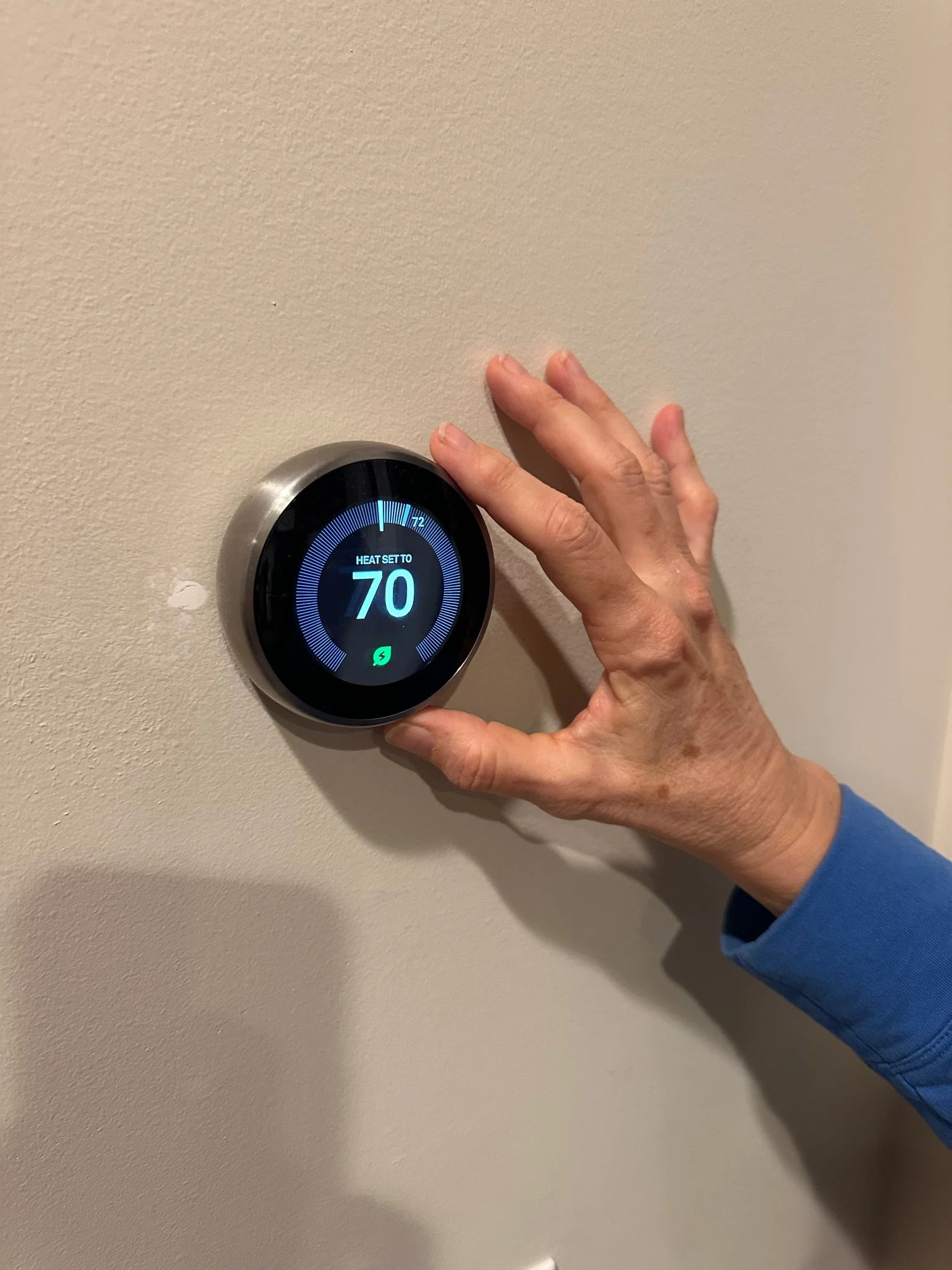
Your furnace is going to be your workhorse from November through March, so keeping it happy is priority number one.
Check Your Air Filter Monthly
This is the single most important thing you can do, and it takes about 90 seconds. Pull out your furnace filter and look at it. If it's visibly dirty or clogged, replace it. If it still looks relatively clean, you can probably wait another month.
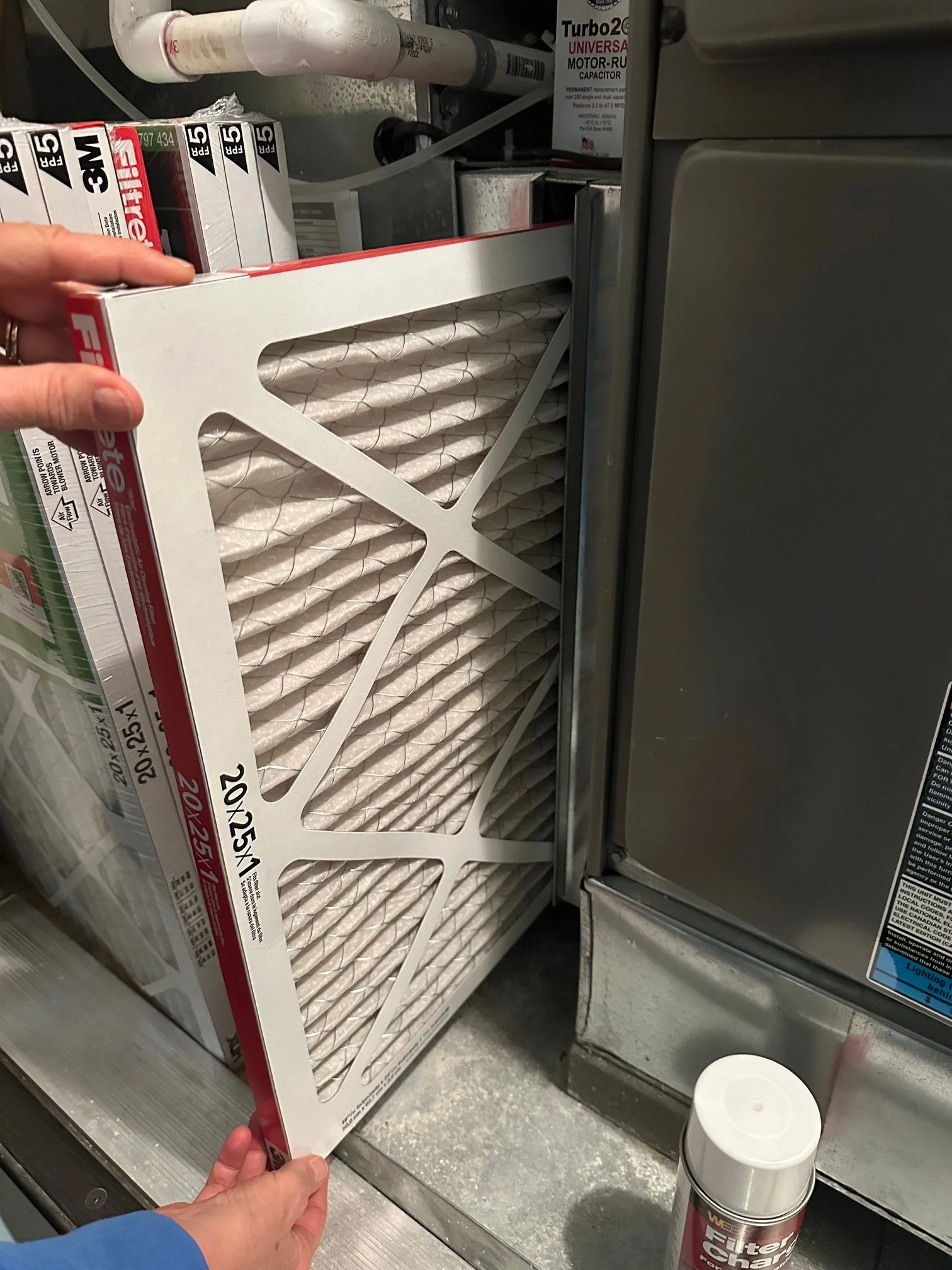
Most new homes use 1-inch pleated filters, and you should be changing them every 1-3 months during heating season depending on how much the system runs. If you have pets or someone in the house has allergies, lean toward monthly changes. Clean filters mean better airflow, more efficient heating, and less strain on your blower motor.
Don't overthink the filter rating either. A MERV 8-11 filter is perfect for most homes. Higher isn't always better—a MERV 16 will filter more particles but can also restrict airflow if your system wasn't designed for it.
Schedule a Professional Inspection (If You Haven't Already)
Even though your furnace is brand new, it's worth having an HVAC tech come out in early winter to make sure everything's running correctly. They'll check for proper gas pressure, confirm the heat exchanger is sealed, test safety switches, and look for anything that might have been missed during installation.
Yes, your furnace has a warranty. But catching a minor issue in December is a lot better than having your heat go out on the coldest night in January.
Don't Ignore Unusual Noises or Smells
New high-efficiency furnaces are remarkably quiet compared to older models. If you're suddenly hearing banging, scraping, or whistling sounds, something's not right. Same with smells—you might notice a slight burning smell the first time you run your heat each season as dust burns off, but that should disappear after a few hours. If it doesn't, or if you smell gas, call for service immediately.
Humidity: The Silent Comfort Factor
Here's something most new homeowners don't expect: winter air inside your home gets really, really dry when you're running the heat constantly. We're talking 15-25% relative humidity, which is drier than most deserts.
Low humidity makes everything feel colder (so you turn up the heat and waste money). It dries out your skin, irritates sinuses, causes static electricity, and can even crack wood furniture or flooring. Ideally, you want indoor humidity between 30-40% during winter.
Monitor Your Humidity Levels
Pick up a cheap hygrometer (you can find them for $10-15 at any hardware store or online). Check it every few days to see where you're at. If you're consistently below 30%, you've got options.
Many new homes come with a whole-house humidifier installed on the furnace. If yours has one, make sure it's turned on and set appropriately. These systems add moisture to the air as it's heated and distributed through your house.
If you don't have a whole-house system, a good quality room humidifier in your bedroom and main living area can make a big difference. Just keep them clean—standing water can grow bacteria and mold if you're not changing it regularly.
The ERV Advantage
If your home has an Energy Recovery Ventilator (standard in Aspen homes built to Kansas City code), it's helping with humidity balance automatically. ERVs exchange stale indoor air for fresh outdoor air while recovering both heat and moisture. That means in winter, they're pulling some of that dry outdoor air in but tempering it with the moisture from your indoor air before it gets exhausted.
It's a more sophisticated system than just opening a window or running an exhaust fan, and it keeps your indoor environment healthier without spiking your heating bills.
Plumbing: Protect Your Pipes
Kansas City doesn't usually stay below freezing for weeks on end, but we get cold snaps that can cause problems if you're not prepared.
Check Exterior Faucets and Hose Bibs
You should have disconnected garden hoses back in November before the first hard freeze. If you haven't done that yet—or if you're reading this after a January thaw—go do it now.
Newer homes often have frost-free hose bibs that are designed to drain automatically.
Insulate Exposed Pipes
In most new homes, pipes are run inside the heated envelope of the house, so freezing isn't usually an issue. But if you have pipes in an unheated garage, crawl space, or along exterior walls, wrap them with foam pipe insulation. It's cheap, easy to install, and can prevent a very expensive mess.
Know Where Your Main Water Shutoff Is
Hopefully you'll never need this information in an emergency, but you should know exactly where your main water shutoff valve is located and how to turn it off. It's usually in the basement near where the water line enters the house, or in the garage in homes built on slabs.
If a pipe does burst, the faster you can shut off the water, the less damage you'll have. Take 30 seconds to locate it now so you're not hunting for it in a panic later.
Set Your Water Heater Temperature
Your water heater should be set to 120°F. That's hot enough for showers and laundry, but not so hot that it's a scalding risk or wasting energy. You can usually check and adjust this on the thermostat dial on the side of the tank. If you have a tankless water heater, you'll adjust it through the digital control panel.
Windows, Doors, and Weatherstripping
Modern windows and doors are dramatically better insulated than older ones, but they're not perfect. Air leaks around them are one of the most common sources of drafts and heat loss.
Check for Drafts
On a cold, windy day, hold your hand near the edges of windows and doors. Do you feel air moving? That's a leak. You can also use a stick of incense—hold it near the window frame and watch the smoke. If it's blowing sideways, you've got a draft.
Most of the time, these leaks are coming from weatherstripping that wasn't installed perfectly or has compressed over time. You can buy replacement weatherstripping at any hardware store and install it yourself in about 10 minutes per door or window.
Inspect the Caulking
Look at the caulk lines around your windows, both inside and outside. Any gaps or cracks should be re-caulked. This is especially important on the exterior where water can get in during freeze-thaw cycles and cause damage.
Don't Block Vents
It's tempting to cover floor vents with furniture to get more usable space, but blocking vents can create cold spots and make your furnace work harder. Make sure all your supply and return vents have at least a few inches of clearance.
Gutters and Drainage
This might seem like a fall task, but winter is when you really pay for any gutter issues you didn't address earlier.
Check for Ice Dams
After a heavy snow, take a look at your roof line. If you see icicles hanging from the gutters or ice building up along the edge of your roof, that's an ice dam forming. It happens when heat escaping through your attic melts snow on the upper part of your roof, and that water refreezes when it hits the colder eaves.
Ice dams can back water up under your shingles and cause leaks. If you're seeing them, it usually means either your attic insulation or ventilation needs improvement. New homes shouldn't have this issue—modern codes require much better attic insulation—but it's worth watching for.
Clear Downspout Drainage
Make sure water from your downspouts is draining away from your foundation, not pooling next to it. When that water freezes, it can put pressure on your foundation or seep into your basement when it thaws.
If you have underground drainage pipes connected to your downspouts, check that they're not clogged. A garden hose down the opening can help flush out any leaves or debris.
Safety Devices: Test Them Monthly
This takes five minutes and could literally save your life.
Test Smoke Detectors
Push the test button on each smoke detector in your house. You should hear a loud beep. If you don't, replace the batteries. If it still doesn't work, replace the unit.
In new homes, smoke detectors are usually hardwired with battery backup, but those backup batteries still need to be replaced periodically. Most detectors will start chirping when the battery is low, but don't wait for that—test monthly.
Test Carbon Monoxide Detectors
CO detectors work the same way as smoke detectors—press the test button and listen for the alarm. Carbon monoxide is an odorless, colorless gas produced by gas furnaces, water heaters, and fireplaces. Your house should have CO detectors on every floor, especially near sleeping areas.
New furnaces have safety systems that shut down if there's a problem, but a working CO detector is your backup protection. Don't skip this one.
Check Fire Extinguishers
You should have at least one fire extinguisher in your house, ideally in the kitchen. Check the pressure gauge—the needle should be in the green zone. If it's in the red, the extinguisher needs to be recharged or replaced.
Also make sure everyone in your household knows where it is and basically how to use it. You don't want to be reading instructions during an emergency.
The 10-Minute Monthly Home Maintenance Routine
Here's the honest truth: most people aren't going to do hour-long maintenance walkthroughs every month. But you can absolutely handle 10 minutes, and 10 minutes is enough to catch 90% of potential issues.
Set a recurring reminder on your phone for the first Saturday of every month (or whatever day works for you). Then do this quick circuit:
1. Check furnace filter (2 minutes) - Look at it, replace if needed
2. Test smoke and CO detectors (2 minutes) - Hit the test button on each one
3. Check for drafts (2 minutes) - Walk past windows and doors, feel for cold air
4. Look at humidity levels (1 minute) - Glance at your hygrometer
5. Scan for leaks (2 minutes) - Look under sinks, around toilets, at the water heater
6. Check thermostat (1 minute) - Make sure settings make sense for current weather
That's it. Ten minutes, once a month, and you're staying ahead of almost everything that could go wrong.
What You Don't Need to Worry About (Yet)
New homes come with warranties for a reason. Here's what you can safely ignore for the first year or two:
Roof inspections - Your roof is brand new. Unless you see visible damage from a storm, it doesn't need attention.
Major appliance maintenance - Your washer, dryer, dishwasher, and other appliances are under warranty. Use them according to the manual, but you don't need to do anything special yet.
Paint touch-ups - Some minor settling and paint cracking is normal in the first year. Wait until after your 1-year warranty walkthrough to address it all at once.
Deep HVAC cleaning - Your ducts and HVAC system are clean. You don't need duct cleaning services or anything beyond basic filter changes.
When to Call for Help
Don't try to be a hero with stuff you're not comfortable handling. Here's when to call a professional:
No heat - If your furnace won't run and you've checked the thermostat and circuit breaker, call an HVAC tech.
Water leaks - Small drips under a sink you might DIY. Water running down a wall? Call a plumber immediately.
Gas smell - Leave the house and call the gas company emergency line. Don't try to find the leak yourself.
Electrical issues - Outlets that don't work, frequent circuit breaker trips, or flickering lights need an electrician.
Weird noises from appliances - If your furnace, water heater, or any major system is making sounds it didn't make before, get it checked.
Your home is still under warranty for the first year (and many systems have longer warranties). Use that coverage when you need it. That's what it's there for.
Take Advantage of New Home Features
One of the benefits of a new home is that your systems are designed to work together efficiently. Your high-efficiency furnace and ERV (if you have one) are reducing your energy bills every month compared to an older home. Your insulation and air sealing are keeping you more comfortable with less effort.
But these systems work best when you maintain them properly. A $15 air filter changed monthly protects a $5,000 furnace. A $10 hygrometer helps you manage humidity that protects $20,000 worth of flooring and furniture. Small maintenance habits pay off exponentially.
Final Thoughts: Build the Habit Early
The first winter in a new home is the perfect time to establish good maintenance habits. Set up those monthly reminders, spend the 10 minutes walking through your checklist, and you'll catch issues early when they're cheap and easy to fix.
New homes are incredibly reliable compared to what people dealt with 20 or 30 years ago. Building codes are better, materials are better, and systems are more efficient. But they're not maintenance-free. The difference is that now, maintenance is mostly about prevention and optimization—not constantly fixing things that break.
Take care of your house, and it'll take care of you through many Kansas City winters to come.
Need maintenance resources or have questions about your new home's systems? Contact Aspen Homes—we're here even after the build is finished.