
Custom Home Builder Kansas City: What Makes Aspen Homes Different
When you start looking for a custom home builder in Kansas City, you'll notice pretty quickly that the options can feel overwhelming. Some builders only work in certain neighborhoods. Others have a limited selection of floor plans. And then there are those who promise custom work but really just mean you can pick your countertops.
We built Aspen Home Homes on a different foundation. After 45 years in the construction business between Tony Libra and Steve Gilliland, we knew exactly what frustrated people most about the homebuilding process—and what they actually needed from their builder. The answer wasn't complicated, but it required us to do things differently from day one.
What "Custom" Actually Means at Aspen

Here's the thing about custom homebuilding: it should mean you get a say in the things that matter to your life, not just surface-level finishes. Sure, you'll choose your paint colors and cabinet hardware. But more importantly, you'll work with us to design a floor plan that actually fits how your family lives.
Need a main-floor bedroom because you're planning ahead for aging parents? We'll build it. Want your home office tucked away from the main living area because you work from home full-time? Easy. Prefer a mudroom that opens directly to the garage with enough space for four kids' worth of sports equipment and backpacks? We've done it dozens of times.
The process starts with a real conversation about your life—not just a standard questionnaire. We ask about your daily routines, your long-term plans, and honestly, the things that drive you crazy about your current house. Those insights shape everything that comes after.
The Aspen Build Process: What to Expect
We've refined our process over the years, and while every custom build is unique, the timeline and milestones stay consistent. That predictability matters when you're coordinating a mortgage, selling your current home, or trying to time a move around school schedules.
Initial Consultation and Budget (Weeks 1-2)
Most people come to us with a general idea of what they want but aren't sure if it's realistic for their budget. We start by talking through your must-haves versus nice-to-haves, looking at lot options, and putting together a preliminary budget. This isn't a sales pitch—it's genuinely about making sure building with us makes sense for where you are financially and what you're trying to accomplish.
We're straightforward about costs because surprises are the fastest way to ruin a build experience. If something's going to push you over budget, we'll tell you upfront and suggest alternatives that get you close to the same result for less money.
Design and Customization (Months 2-3)
Once you're committed and we've settled on a lot, we move into the design phase. You'll work directly with us—not some third-party design center an hour away. We sit down with floor plans, talk through modifications, and sketch out ideas together.
This is where custom really comes to life. Maybe you love a particular plan we've done before but need to flip the layout to capture better light. Or you want to add a covered patio that extends your outdoor season. We make those changes and show you exactly how they'll affect the price.
We also talk through the practical stuff that people sometimes overlook until it's too late: where the sun hits in the morning, how traffic noise carries from nearby streets, the best spot for your AC condenser so it's not right outside your bedroom window. Small details, but they make a big difference in how much you love living there.
Permitting, Foundation, and Framing (Months 4-6)
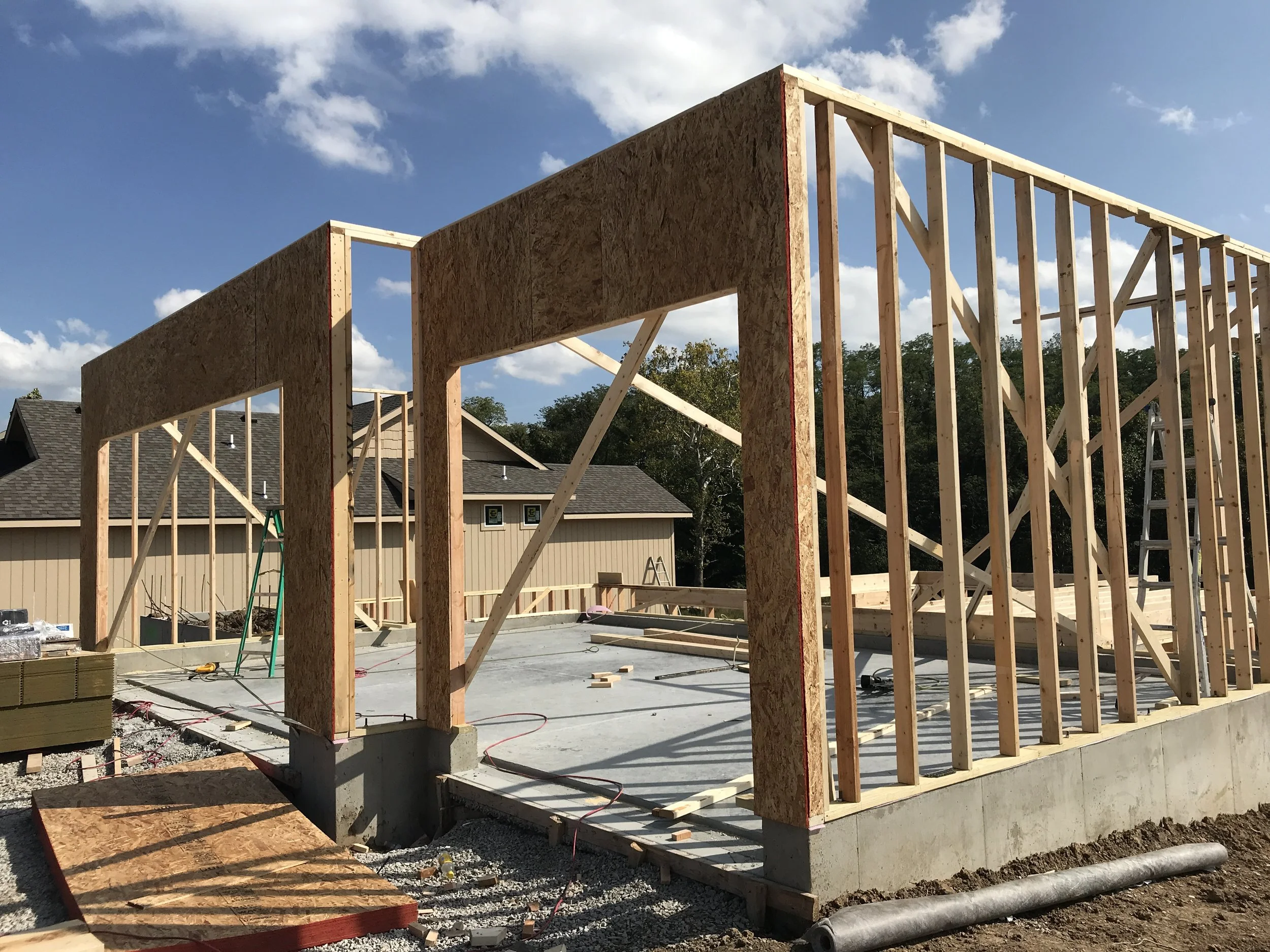
While you're waiting for permits to clear—which varies by city but is usually 4-6 weeks in the Kansas City metro—we're ordering materials and scheduling subcontractors. Once we break ground, things move quickly. You'll see your house go from a foundation pour to a fully framed structure in a matter of weeks.
We schedule regular walkthroughs during this phase so you can see the progress and ask questions. It's a lot easier to understand how your spaces will feel when you can actually walk through the framing and visualize furniture placement or morning routines.

Mechanicals, Insulation, and Drywall (Months 6-8)
This phase is less visually exciting but honestly more important than almost anything else. This is when we install your high-efficiency HVAC system, run all the electrical and plumbing, air-seal the envelope, and insulate.
We include some features as standard that other builders charge thousands extra for—or don't offer at all. Every Aspen home built to Kansas City, MO code gets a high-efficiency furnace (95% AFUE or higher) and an Energy Recovery Ventilator. Those aren't upgrades you have to remember to ask for. They're just part of how we build.
The ERV is something we added as standard a few years back after seeing how much it improved comfort and air quality in modern, tightly-built homes. It brings in fresh filtered air continuously while recovering the energy you've already paid to heat or cool your indoor air. Most people don't even know what an ERV is when they start the process, but after living with one, they can't imagine a home without it.
Finishes and Final Walkthrough (Months 8-10)
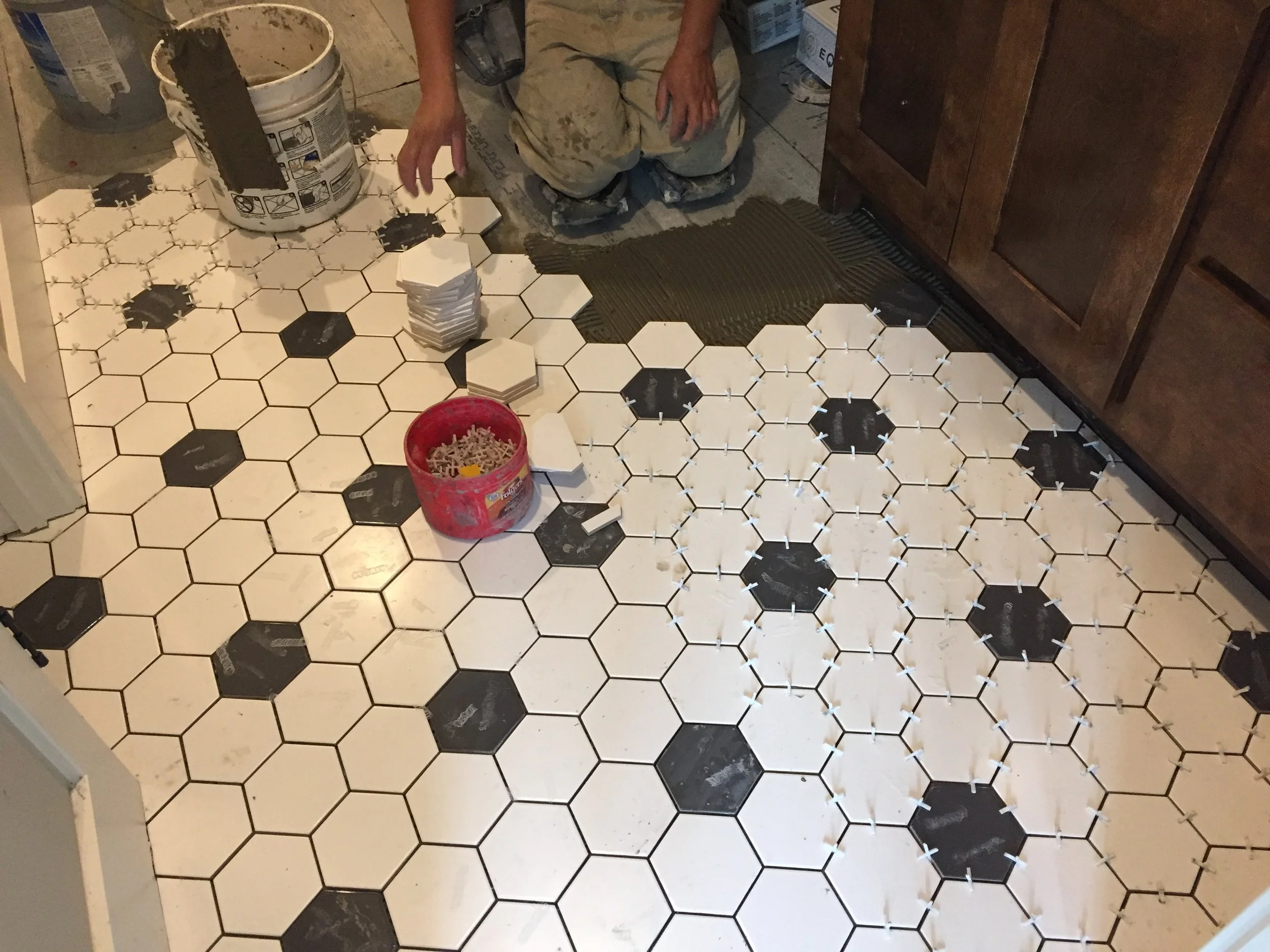
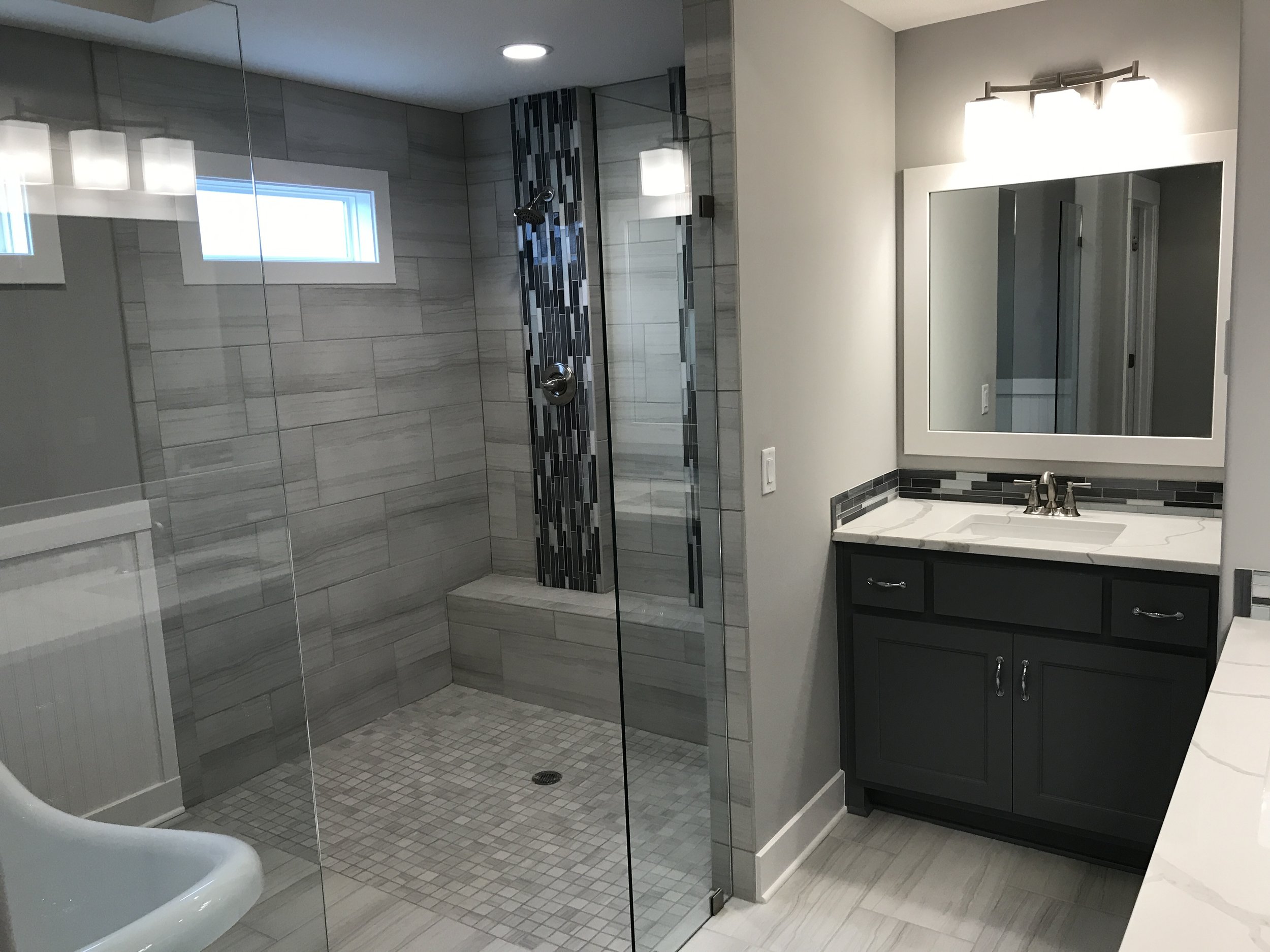
The finish phase is when you see all your selection choices come together. Cabinets go in, flooring gets installed, countertops are templated and set, and all your lighting and plumbing fixtures get connected. It's satisfying to watch.
Before you close, we do a comprehensive walkthrough together. We're looking for anything that needs adjustment or touch-up, and you're checking that everything is exactly as you expected. We don't rush this process. If something isn't right, we fix it before you move in—not after.
Communication Makes or Breaks the Experience
Ask anyone who's built a custom home what made the biggest difference in their experience, and they'll tell you it was communication. Or the lack of it.
We keep you in the loop through every phase. You'll have Tony's cell number. Yes, his actual cell number. If you have a question or concern, you text them directly. You don't go through a project manager or an assistant or get stuck in some ticketing system. You talk to the people who are actually building your house.
We also send weekly progress updates with photos so you can see what's happening even if you can't make it to the site. And when decisions need to be made, we give you a timeline and explain what's driving it. No one likes being told "we need to know by Friday" without understanding why Friday matters.
Standard Features That Most Builders Charge Extra For
This is one area where we've taken a pretty firm stance over the years. There are certain features that just make sense for every new home—especially in Kansas City's climate with hot, humid summers and cold winters. Rather than treating these as optional upgrades, we build them in as standard.
High-efficiency furnaces aren't just good for the environment—they cut your monthly heating bills significantly. Over the 15-20 year life of a furnace, that's thousands of dollars in savings. We don't see the point in installing something less efficient just because it's cheaper upfront when you're the one who'll pay more every month for the next two decades.
Energy Recovery Ventilators are the same logic. They cost more to install than a simple exhaust fan, but they improve your air quality and reduce your HVAC load year-round. When you factor in that most families have someone with allergies or asthma, and that modern homes are built much tighter than they used to be, continuous fresh air isn't optional—it's essential.
We also include things like low-E windows, insulated garages, and proper attic ventilation. None of these will show up in your Instagram photos of your new home, but they all make a tangible difference in comfort and long-term durability.
Why Timeline Matters (And What Can Push It)
The typical custom build with Aspen takes 9-12 months from when you first sit down with us to when you're moving boxes into your new house. That timeline assumes normal weather, no major material shortages, and decisions getting made on schedule.
Here's what can add time:
Design changes after permitting: If you decide halfway through framing that you want to add a bathroom or change a window layout, we have to revise plans, resubmit for permits, and wait for approval. That can add 6-8 weeks.
Material delays: We saw this a lot in 2020-2022 with COVID supply chain issues. Appliances, windows, and garage doors were the biggest bottlenecks. Things have stabilized, but occasionally something is on backorder. We try to stay ahead of this by ordering long-lead items early.
Weather: Foundation work requires dry conditions. Roofing needs dry weather too. If we hit a particularly wet stretch in spring, we might lose 2-3 weeks waiting for conditions to cooperate. We can't control Mother Nature, but we plan around historical weather patterns to minimize delays.
Decision timing: When it's time to choose tile or cabinets or light fixtures, we give you a deadline. That's not us being pushy—it's because the framers need to know where recessed lights go, the plumbers need to know faucet models, and the cabinet shop needs three weeks to build your order. If decisions drag out, the whole schedule shifts.
We're upfront about all of this because the more you understand what drives the timeline, the more control you have over keeping things on track.
What Working With Us Actually Feels Like
We've had clients tell us the part that surprised them most was how involved we stayed throughout the process. Tony or Steve is on every job site multiple times a week. We're walking the framing to check for issues, reviewing drywall quality, and making sure the finish work meets our standards—not just the code minimum.
You're not hiring us to disappear after contracts are signed. You're hiring us to build your house right, and that requires being present.
We also don't subcontract out the project management to someone who's juggling 30 builds at once. When you call, you're talking to us. When there's a problem, we're the ones figuring out the solution. That hands-on approach is probably not the most scalable business model, but it's the only one that makes sense for custom work.
Questions You Should Ask (And How We Answer Them)
Before you commit to any builder, you should ask direct questions about how they work. Here are a few worth asking us—or anyone else you're considering:
How many homes do you build at once? We typically run 6-8 projects at various stages. Any more than that and quality suffers. Any less and we lose the efficiency that keeps prices competitive.
What's your warranty coverage and response time? We offer a full 1-year workmanship warranty and a 10-year structural warranty. If you call with an issue, we respond within 24-48 hours. After hours, you can still reach us directly.
What happens if we go over budget? We discuss this before it becomes a problem. If you're making changes that push costs higher, we'll tell you the impact before proceeding. If something unexpected comes up during construction (like foundation issues on the lot), we work through options together.
How involved can we be? As involved as you want. Some people visit the site weekly. Others prefer our photo updates and only come for scheduled walkthroughs. Both approaches work fine.
Location Matters: Where We Build
We focus on Kansas City, Missouri and Liberty, Missouri because we know these markets inside and out. We understand the soil conditions, the permitting processes, the school districts people care about, and the neighborhoods that hold value.
Liberty in particular has seen strong growth over the past decade. The school district is excellent, you've got easy access to I-35 for commuting, and there's still room to build in established neighborhoods. We've completed numerous custom homes there and have strong relationships with city staff, which helps move projects through permitting more smoothly.
In Kansas City North, we work in areas where lots are still available and where custom building makes financial sense. We'll be honest if a location you're considering doesn't pencil out—either because lot costs are too high relative to finished home values, or because site challenges would eat up too much of your budget.
Ready to Start the Conversation?
If you've been thinking about building custom but weren't sure where to start, the answer is simpler than you might think: just start a conversation.
We're not trying to sell you something you don't need. We're trying to figure out if what you want to build and what we do well are a good match. Sometimes they are, and we end up building you a house you'll love for decades. Sometimes they're not, and we'll tell you that too.
The first consultation costs you nothing but an hour of your time. We'll talk through your goals, look at your budget, discuss lot options, and give you a realistic picture of what's possible. No pressure, no hard sell—just honest information so you can make the best decision for your family.
Building a custom home is a big decision. It should start with a builder who's willing to answer questions, explain processes, and treat you like a partner—not a transaction. That's what we've built our reputation on, and it's what you'll get when you work with Aspen.
Ready to explore what's possible? Contact Aspen Homebuilders to schedule your consultation.